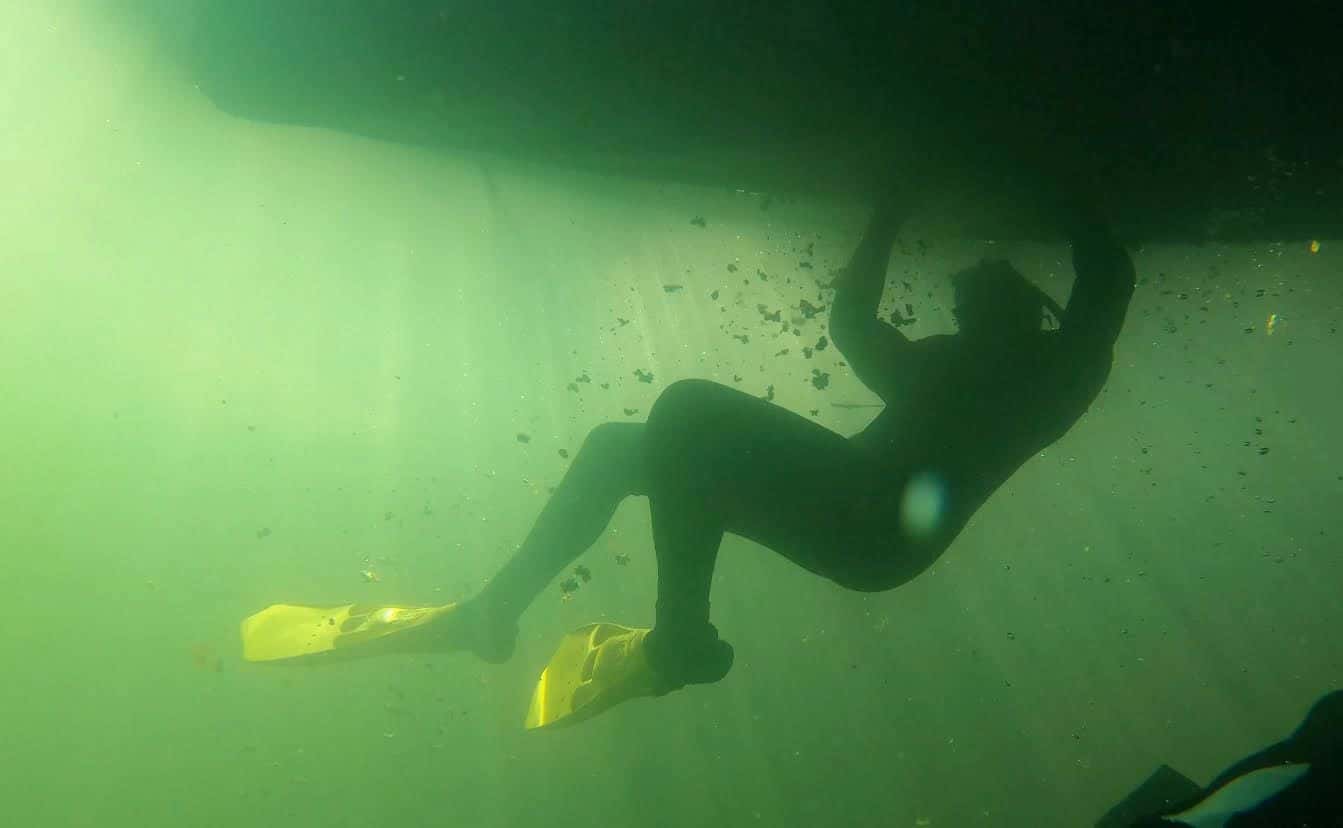
Zinc anode replacement in South Florida
Every anode checked on every monthly dive, the percentage on your report, and replacement at 50%, in the water, with no haul-out and no separate visit.
- 5.0★ on Google · 335 reviews
- Licensed & insured
- $2,000,000 liability insurance
- 5.0★ on Google · 335 reviews
- Photos after every cleaning
- Monthly dive report: zinc % and bottom paint condition
- Licensed & insured · $2,000,000 liability

The cheapest part on the boat, protecting the most expensive ones
Zinc anodes prevent electrolysis on your boat: in salt water, the different metals below the waterline form a battery, and the anode is the metal chosen to corrode first so your props, shafts, rudders and drives do not. Depending on the electrolysis in the water around your dock an anode can last anywhere from 3 to 13 months, which is too wide a range to manage by the calendar. So we do not. Every monthly hull cleaning includes an inspection of each anode, the percentage goes on your dive report, and anything at 50% is replaced on that dive.
The full explanation of galvanic corrosion, stray current, anode metals and the 50% rule is in our zinc anode guide.
What your zincs protect
Everything bonded to the anodes shares their protection, and loses it when they are gone.
Props and shafts
Bronze and stainless in salt water corrode first without an anode taking the hit.
Rudders, struts and trim tabs
Every piece of underwater metal bonded to the system is protected by the same anodes.
Outdrives and pods
Aluminium drives are the most vulnerable metal on the boat and carry their own anodes.
Thru-hulls and bonded fittings
Anything on the bonding circuit shares the protection, and shares the loss when the zincs are gone.
How zinc replacement works on the plan
Checked on every dive
The diver inspects each anode during the monthly cleaning and records its remaining percentage on the dive report.
Replaced at 50%
Any anode at or below half is swapped on the same dive, in the water, so there is no second visit and no haul-out.
Trend on the report
Month over month you see how fast your slip eats anodes. A sudden drop is flagged as a likely wiring problem, not a zinc problem.
What the dive report shows
A written dive report and photos come with every cleaning.
- Zinc percentage per anode; replacement at 50%.
- Bottom paint condition, so the next haul-out is planned, not guessed.
- Photos of the hull and running gear.
- Anything the diver spotted: clogged thru-hulls, damage, loose gear.
- Detailed photos of the hull and running gear with every monthly visit, so you can compare month to month.
The report arrives after every cleaning whether or not you were there. Over a few months it becomes a history of your slip: how fast the zincs go, how the paint is holding up, and anything the diver spotted. Read more about zinc replacement at 50% and the bottom-paint guide.
When it is a wiring problem, not a zinc problem
Galvanic corrosion is slow and steady. When a set of anodes disappears in weeks, the cause is almost always stray current: a DC fault on your boat or a neighbour's, or a miswired shore-power connection that turns the marina's ground into part of the circuit. A galvanic isolator in the shore-power cord blocks other boats' galvanic current while keeping the safety ground, and a hanging anode adds surface area at a marina berth. If an anode goes from 90% to 40% between two reports, we say so, because replacing zincs faster is not the fix.
Licensed & insured: $2,000,000 liability insurance through Fisk Marine Insurance
Keeping the boat at a marina with vendor rules? Tell us where it is docked when you book. Our divers work from your dock or slip, and you do not need to be there; in a gated community they call ahead and send a text right before the visit.
Zinc replacement questions
Do you replace zincs during the monthly hull cleaning?
Yes. Anodes are inspected on every monthly dive, the percentage goes on the report, and anything at or below 50% is replaced on the same visit, in the water.
How do I know when my zincs need replacing?
You read it on the dive report: each anode's remaining percentage is recorded every month. The rule is replacement at 50%, before the anode is too small to protect the gear it is bonded to.
Why did my zincs disappear in a month?
Normal galvanic corrosion is slow. Anodes that vanish in weeks usually point to stray current: a DC fault on your boat or a neighbour's, or a miswired shore-power connection. A galvanic isolator on the shore-power cord blocks other boats' current; we tell you when the report shows a sudden drop.
Get a Free Quote
Boat length, where it is docked, bottom paint or not. Zincs are part of every monthly cleaning.
Stop guessing at your zincs
Checked every dive, replaced at 50%, percentage on every report. Call 561-666-3716 or send the form.