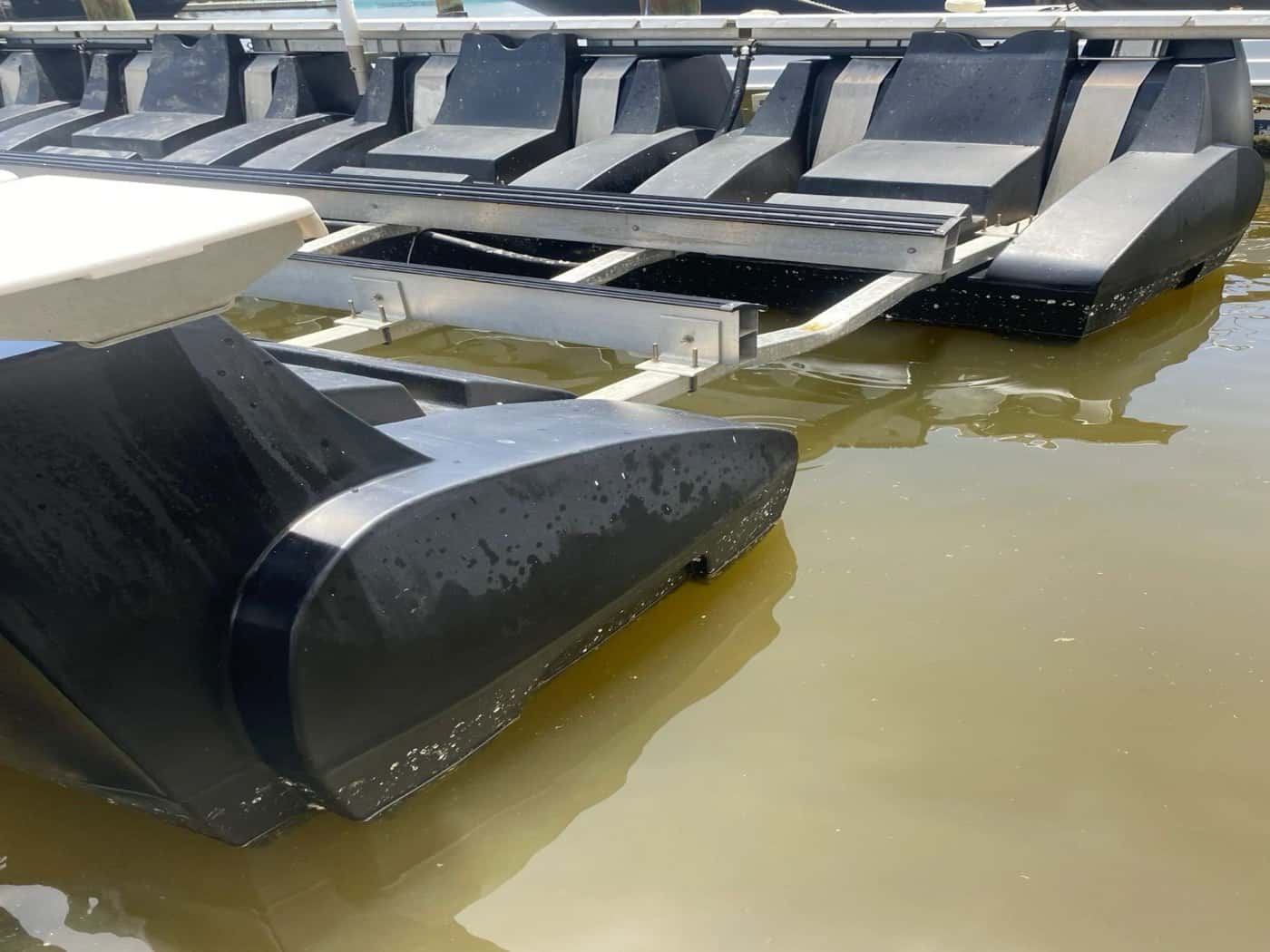
Inspect four to eight weeks before the August-to-October peak: walk the dock at low tide, probe every piling at the waterline with a screwdriver, check lift cables, brackets and the motor, clear and photograph the seawall, and make sure your boat has somewhere to go. Before a storm, take the boat off the lift, raise the cradle and tie it off, double lines and add chafe gear. After the storm, have the pilings, the seawall toe and the hull and running gear inspected underwater before you trust them.
When should I inspect my dock and seawall for hurricane season?
Four to eight weeks before the peak, which in South Florida means May or June. That leaves time to wrap a piling, replace a cable or fill a void before the first named storm, and to have contractors available; by August everyone is booked. Marine contractors on both coasts of Florida publish the same pre-season routine, and it starts with a walk at low tide when the most of the structure is visible.
Dock and piling checklist
- Probe every piling at the waterline with a screwdriver. Sound wood resists; if the tip sinks in, shipworms or rot have hollowed it. Marine-borer damage at the waterline, hidden under old wraps, is the most common failure contractors find after a storm.
- Look for pinholes and splits. Shipworm entry holes are no bigger than a nail head while the inside is being eaten out.
- Check brackets and hardware for galvanic corrosion. Rust streaks, swollen bolts and protruding fasteners are the parts that let go first under load.
- Check the decking and stringers. Loose boards become missiles; rotten stringers drop the deck.
- Clean the growth off. Barnacles and oysters hold moisture and salt against wood and steel and hide the damage underneath. A dock cleaning with the multi-point inspection does both at once.
- Decide on protection now. A sound piling gets a wrap; a hollowed or broken one gets a Snap Jacket concrete sleeve. Both are far cheaper than a replacement after the storm takes the piling and the dock with it.
Boat lift checklist
- Cables. Look for broken strands, rust and kinks; a frayed cable under storm load fails at the drum.
- Motor, gearbox and cover. Run the lift through its range and listen. Make sure the cover is secured.
- Beams, bunks and cradle. Growth on submerged beams and bunks scrapes the hull and hides corrosion; hydro-hoists sit fully in the water and foul the most.
- Before a storm: take the boat off the lift. A boat left on a lift is the most exposed thing on the property. Move it to a hurricane hole, a trailer inland or a yard haul-out.
- Raise the cradle to its top and tie it off so surge cannot lift it off the cables and the wind cannot swing it.
Seawall checklist and the claim file
A seawall rarely fails in the wind; it fails when surge pushes water behind it and the tide pulls the backfill out through a crack. Before the season, check the cap, panels and joints for cracks, look for depressions in the yard, clear the weep holes and have the growth removed from the submerged face so cracks can be seen. Our seawall inspection does exactly that and produces a dated report with photos.
Then photograph everything. Homeowner policies treat docks and seawalls as other structures with their own limits, and they usually exclude storm surge, flood and wind-driven water; the National Flood Insurance Program excludes docks, piers and seawalls altogether. Wind, fire and lightning damage may be covered, and every insurer will ask what the structure looked like before. A dated inspection report with photos from before the season is the best evidence a claim can have. We are not insurance advisers; read your policy or ask your agent what it covers.
Boat checklist
| Task | Why |
|---|---|
| Decide where the boat goes, in May | Haul-out yards, trailers and hurricane holes fill up when a storm is named |
| Double the lines and add chafe gear | Surge changes the geometry of every line; chafe is what parts them |
| Strip canvas, electronics and loose gear | Windage and projectiles |
| Clean the hull and running gear beforehand | A fouled hull with clogged thru-hulls is the one that sinks at the dock when the bilge pump cannot keep up |
| Photograph the boat, HIN and equipment | For the claim, and for identification if it moves |
Boat preparation before a named storm (state and county boating guidance, sources below).
What should be inspected after the storm?
Everything below the waterline, before you use it. Surge scours the toe of a seawall and can undermine it without a visible crack; pilings that looked fine can be snapped or hollowed at the mudline; a lift cable can be one strand from failing; and a boat that rode out the storm at the dock may have struck debris with its props, rudders or shafts. An underwater look, with photos, is how you find out.
- Pilings: probe at the waterline and below, check for lean and for new holes.
- Seawall toe: scour, undermining, new voids behind the wall, sediment in the water at tide change.
- Lift: cables, cradle alignment, beams and bunks for debris and bent members.
- Hull and running gear: debris strikes on props, shafts and rudders, damaged thru-hulls, growth after weeks of neglect.
Send us the address and what you saw from the dock. Our divers cover docks, lifts, seawalls and hulls from Miami to Jupiter, and the report tells you what needs a contractor and what does not.