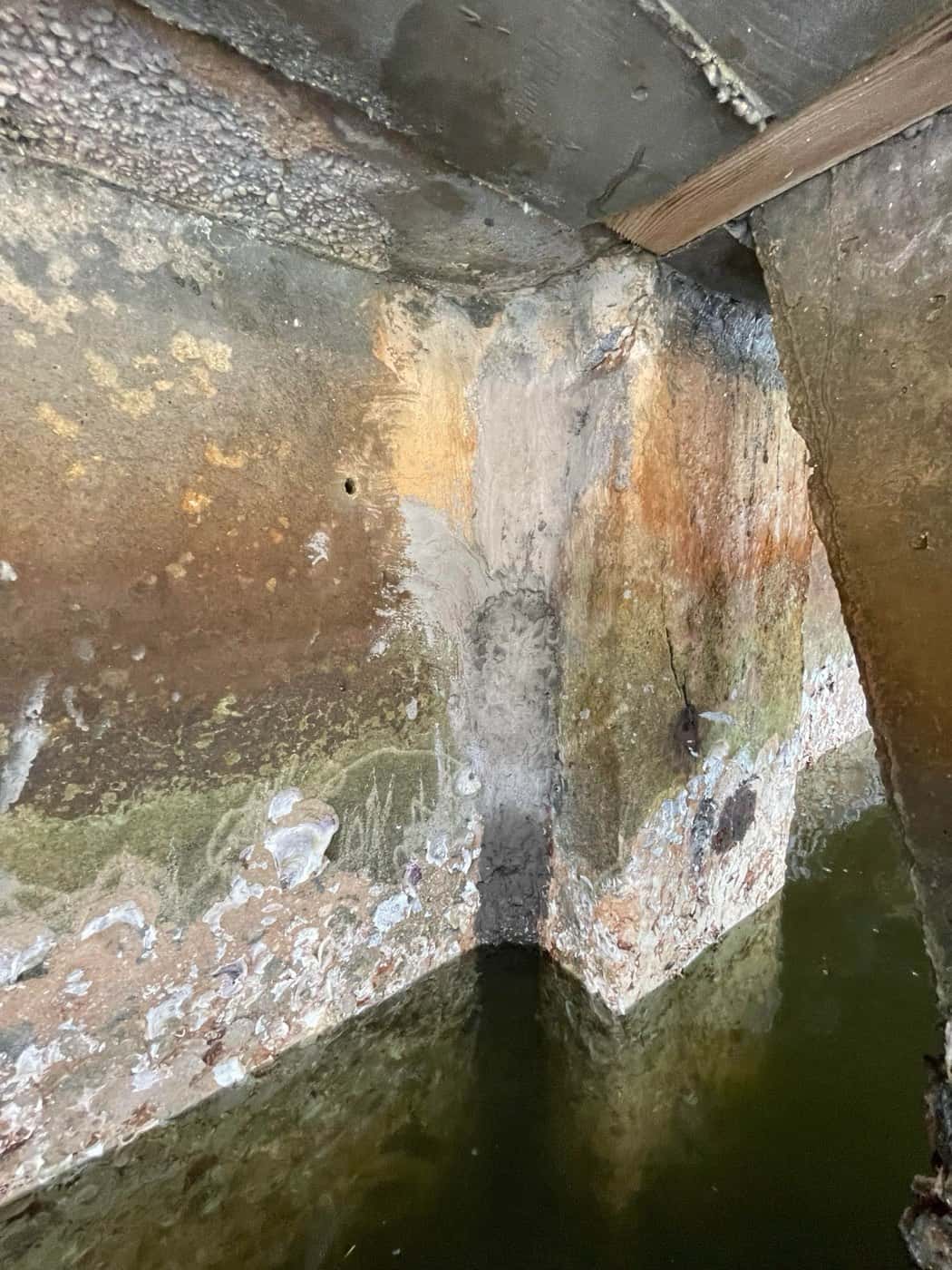
Broward County's tidal flood barrier code sets a minimum seawall cap height of 4 feet NAVD88 for walls built, substantially repaired or rehabilitated before January 1, 2035 (if designed to reach 5 feet by 2050), and 5 feet NAVD88 after that, and it requires owners to keep barriers in good repair; every Broward city had to adopt equal or stricter standards. Miami Beach requires new seawalls at 5.7 feet NAVD and treats any repair costing 300 dollars or more per linear foot as substantial, which triggers the full height. None of this is enforced by a diver, but an inspection tells you which side of the line your wall is on.
What is the Broward County seawall height rule?
Broward County Code Chapter 39, Article XXV (Resilient Standards for Tidal Flood Barriers) is the rule every Broward city now works under. It sets a minimum elevation for the top of a tidal flood barrier, which in practice means the seawall cap:
- Seawalls permitted before January 1, 2035, whether new, substantially repaired or rehabilitated, may be built to 4 feet NAVD88, provided they are designed so the cap can be raised to 5 feet by January 1, 2050.
- Seawalls permitted on or after January 1, 2035 must be 5 feet NAVD88.
- Owners must keep their tidal flood barriers in good repair; a failing or overtopping wall is a citable offence.
- Cities in Broward had two years to adopt standards at least as strict as the county's, so the same numbers apply in Fort Lauderdale, Pompano Beach, Hollywood, Hallandale Beach, Deerfield Beach, Lighthouse Point and Lauderdale-by-the-Sea unless a city went further.
NAVD88 is the North American Vertical Datum of 1988, a fixed reference elevation, not a height above the water on any given day. Your surveyor or the county's elevation data will tell you where your cap sits against it.
What triggers the new height on an existing wall?
The trigger is the scope of the work, not the calendar. Repairing more than half of a wall, or rehabilitating it, brings the whole wall under the current standard, so a large repair on a low wall becomes a raise-and-repair. Small repairs to a sound wall, such as sealing cracks, filling voids or replacing a section of cap, do not by themselves force a height change. That distinction is why an inspection matters before you sign a repair contract: it tells you how much of the wall is actually failing.
Some write-ups say Fort Lauderdale has adopted a stricter local minimum than the county's 4-foot figure. We have not confirmed that on the city's own site, so we quote the county rule here; check with Fort Lauderdale's building department for the city number before you design a repair.
What are Miami Beach's seawall rules?
Miami Beach has the most specific ordinance on this coast, amended in 2025 and explained in the city's own seawall FAQ (June 2025). The city has about 55 miles of seawalls, of which roughly 5 miles are public; the rest belong to property owners.
Figures from the public ordinance and city FAQ, not Barnacle Doctor prices.
| Rule | Miami Beach requirement |
|---|---|
| New seawall height | 5.7 feet NAVD, or 4 feet if designed to be raised to 5.7 |
| "Substantial repair" | Any repair costing $300 or more per linear foot; it must then meet the 5.7 ft standard |
| Enforcement trigger | Overtopping (water coming over the cap) |
| Deadlines after a citation | 60 days to show progress, 730 days to complete the work |
| Fines | $250 for a first offence, then $500 per day |
| Approvals | Miami-Dade DERM Coastal Resources approval required |
Miami Beach seawall ordinance figures from the city's June 2025 FAQ and Ordinance 2025-4754 (sources below). Public-source figures, not Barnacle Doctor prices.
For an owner on the Venetian Islands, Sunset Islands or Indian Creek, the 300-dollar-per-foot trigger is the number to watch: a structural repair almost always crosses it, which means the repair must bring the wall to 5.7 feet. That can double the scope of a job that looked like a patch.
What about Miami, Palm Beach County and the other cities?
Outside Broward and Miami Beach the rules are city by city. Our city pages note what we found for each: Pompano Beach requires 5-foot walls in some cases, Delray Beach has said most of its seawalls are below its new 4.2-foot minimum, Hollywood updated its ordinance in 2022, and Deerfield Beach's stormwater plan recommends seawall surveys every three to five years. The pattern is the same everywhere: the standard rises, the trigger is a substantial repair, and the wall you inherit with the house may be a foot or more below it.
Do I need a permit to repair a seawall?
- Building permit for any structural repair, from your city.
- Miami-Dade DERM Class I permit for work in tidal waters in Miami-Dade County.
- FDEP (Florida Department of Environmental Protection) authorisation for work below mean high water.
- U.S. Army Corps of Engineers where the water is navigable.
Crack filling and void repair on a sound wall are the small end of that scale; raising or replacing a wall is the large end. We tell you which one you are looking at after the inspection, and our crack repair is quoted free in person. See the seawall inspection and repair page.
Who is responsible for the seawall?
The owner of the land it protects. On a single-family lot that is you; in a condominium the seawall is usually a common element and the association's responsibility. No public program repairs private seawalls in these counties, and the county code's good-repair duty sits with the owner. If you are buying, our home buyers' guide covers what to ask before closing.
How does an inspection fit into the rules?
The rules are about height and repair scope; the inspection is how you learn the scope. We clean the growth off the wall first, then inspect the cap, panels, joints, tiebacks, weep holes, the ground behind the wall and the submerged toe, and write it up with photos. Residential inspections are $250, multi-family and commercial $350. With that report and your cap elevation you can have a real conversation with a contractor or an engineer about whether you are repairing or rebuilding. We recommend an inspection every 1–2 years and after any named storm.